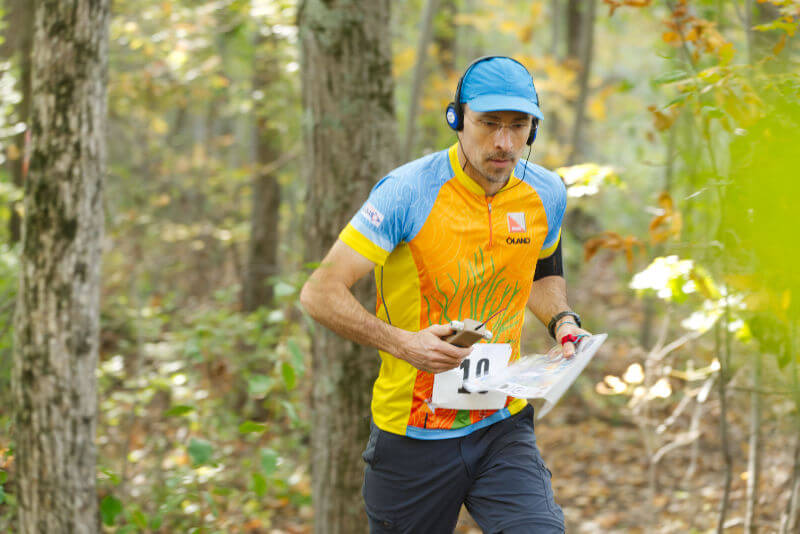
A Message from the President

As another year comes to a close, I’m reminded that navigating unfamiliar terrain is at the heart of orienteering – and of our community. It’s an adventure that challenges us, connects us, and inspires us to keep moving forward together. At Orienteering USA, our focus remains clear: to strengthen our community, expand access to the sport, and ensure a vibrant future for orienteering in the United States.

Thanks to the dedication of our volunteers, clubs, athletes, and supporters, we’ve made meaningful progress this year – and the momentum continues to build.

We’re strengthening services that help our community thrive. From website improvements and universal access to Livelox, to expanded educational resources, youth programming, coaching and mapper development, and monthly online forums, we’re working to make it easier for clubs, volunteers, and athletes to succeed. We’re also collaborating with Sport:80 to build a modern membership database that will better support both OUSA and our clubs, while continuing to invest in our junior and senior national teams across all disciplines.

At the same time, we’re driving innovation and growth. OUSA is preparing the next generation of leaders by funding training for organizers, coaches, and mappers, and by expanding outreach to educators, scouts, and new communities. In 2026, we’ll continue funding projects that encourage new ideas, help reach new audiences, and strengthen local orienteering across the country.

Looking ahead, we’re preparing to welcome the world. In December 2026, Tucson will host the North American Orienteering Championships, bringing competitors from around the globe to compete for age-group titles and providing key qualification opportunities for our elite athletes for the World Games and World Orienteering Championships. We’re also laying the groundwork for the World Trail Orienteering Championships in Los Angeles – the first time this event will be held outside of Europe or Asia – and for orienteering’s inclusion in the first ever U.S.-hosted World Military Summer Games in Charlotte in 2027.

As we look toward the year ahead, I’m inspired by what we’re building together. Thank you for being part of this journey and for everything you do to support orienteering locally, nationally, and on the world stage.

With gratitude and optimism for the future,

Tori Campbell

President, Orienteering USA

A Coach’s Perspective

This is an insightful piece brought to us by orienteering coach Alex Azarov.

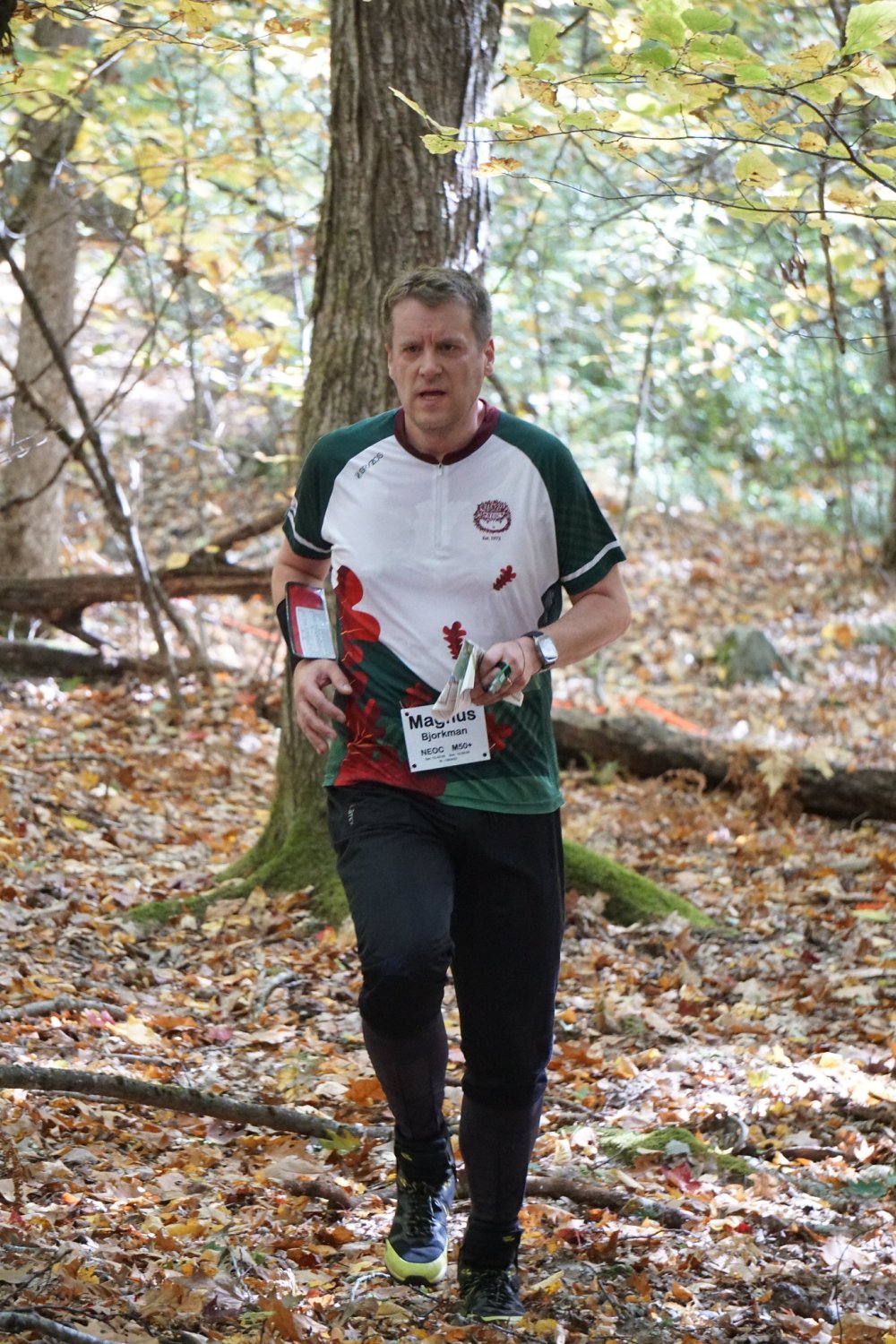
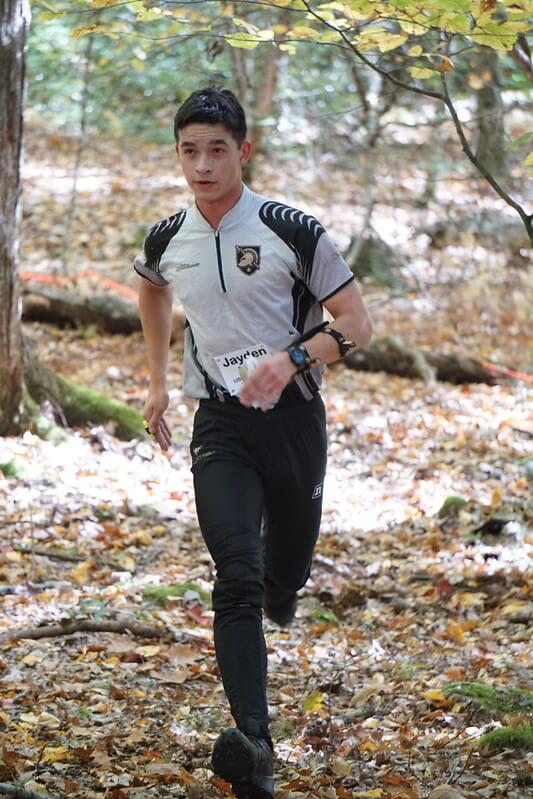
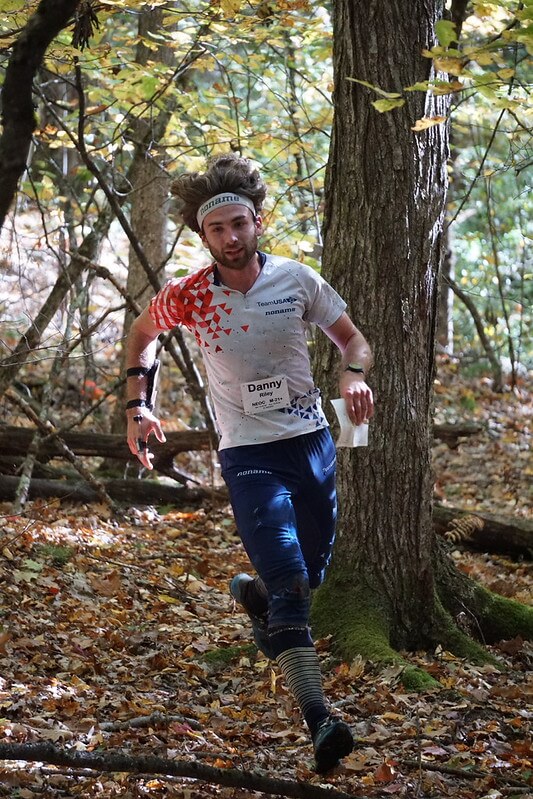
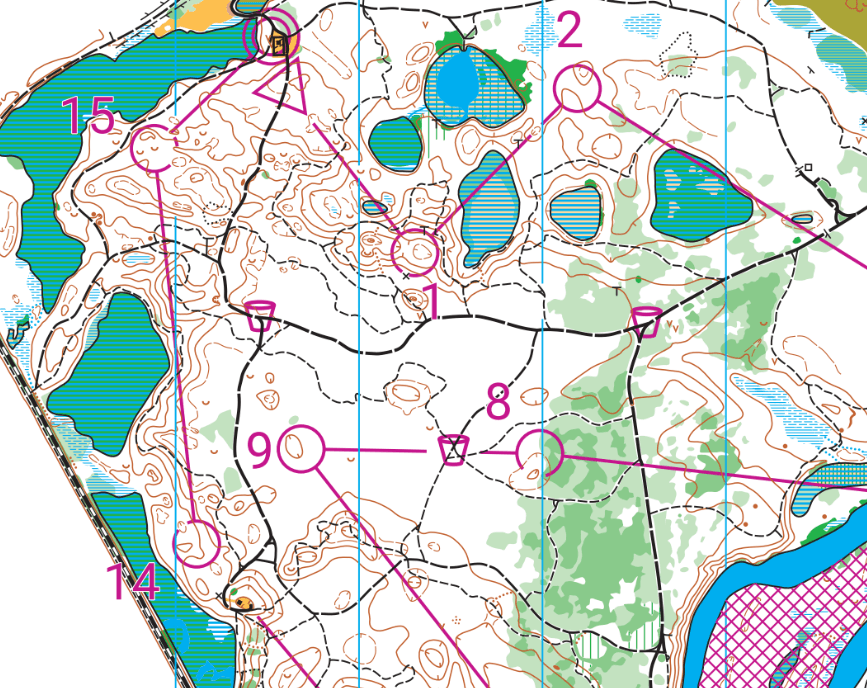
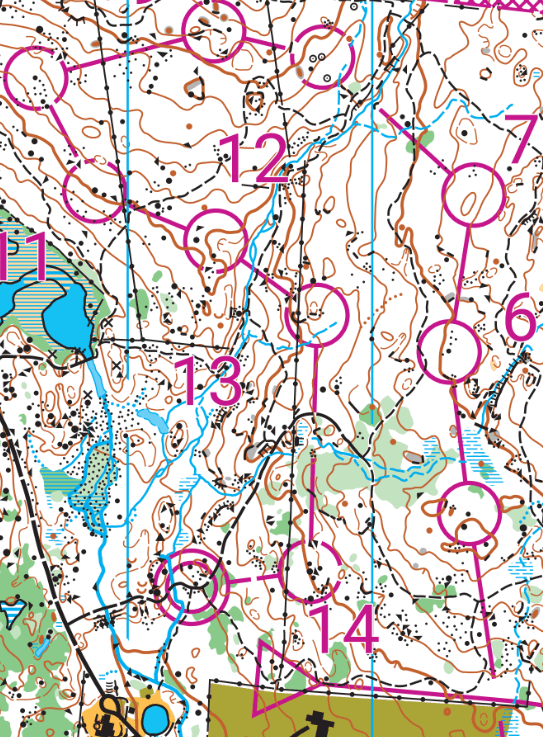
This writing is about the U.S. Champs in Massachusetts in October, specifically the Online Course Review. During that on-line session (recording can be found here ), a few legs from all three competition days were discussed. For each leg, the discussion followed a similar pattern: a couple of route choices were presented, and then comments were made such as “here you had to climb a steep slope,” “running was slow because of stony ground,” or “if you went left you’d have a longer but faster route, though with fewer distinct features for precise navigation.” These are not exact quotes, but you get the idea.
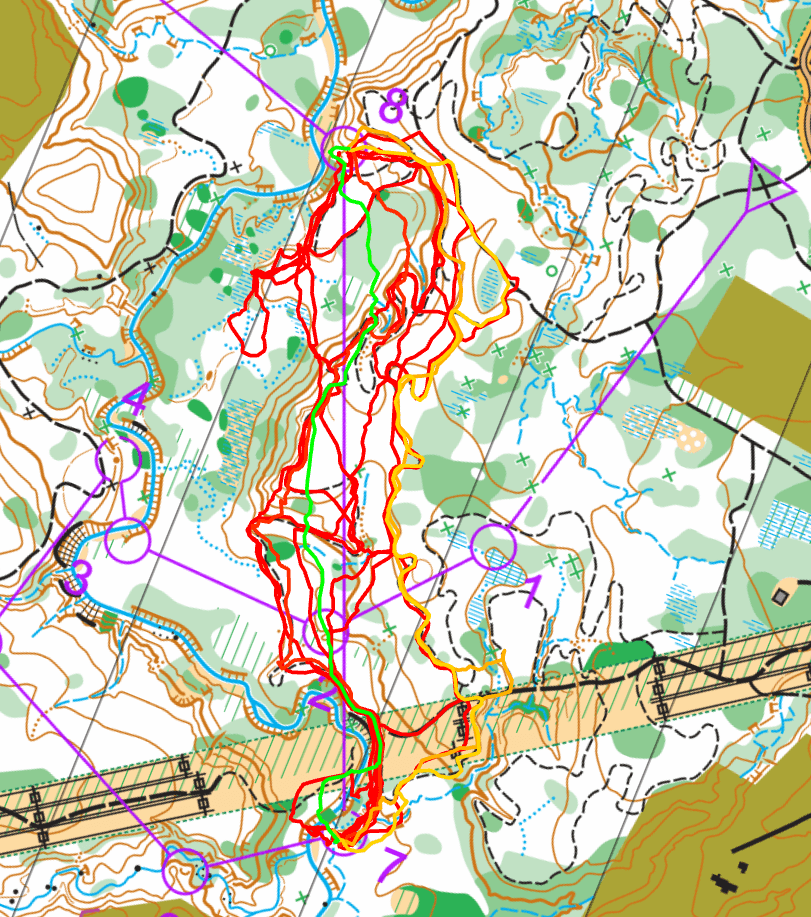
For me, this type of discussion wasn’t very interesting. I found myself thinking, “What am I supposed to learn from this?” There were no conclusions drawn about individual legs and no summary of the discussion as a whole. I want to emphasize that I’m not criticizing the presenters; I’m simply explaining why it wasn’t engaging for me. Such discussions can still be useful in some cases, for example:

  • Sprint orienteering, where analyzing 10-meter differences or the number of turns is normal and helpful.
  • Beginners, who need to see the factors that go into making route choices.

However, this writing is not about route choice.

I was bored and about to leave when suddenly Peter Gagarin asked a very important question. On the recording this happens at around 1h27m. The question concerned one very simple leg from the middle course: Why did so many people mess up such an easy leg?

Wow! That is exactly the kind of question orienteers should be asking. Peter offered his own answer: “probably people don’t check their compasses enough.”

I agree — that is the right answer. But wait… is it actually useful?

Imagine I’m a beginner and someone tells me I’m not checking my compass often enough. What should I do next time? Check it every 15 seconds? Every 20 meters? What is “enough”? The honest answer is: it depends on the situation. You think back to similar situations, draw on your experience, and try to check your compass more frequently when needed. Afterward you analyze the result and adjust. This trial-and-error approach works — but it takes a long time before you see improvement.

Let’s think further. You really need to check your compass in two situations:

  1. When running on a compass bearing and you reach the limit of visibility from your previous reference point.
  2. When changing direction, i.e., making a turn.

The first case is straightforward. The second is more interesting. You change direction when you reach or leave a linear feature such as a trail, stream, vegetation boundary, or marsh edge. You could form a habit of checking your compass every time you reach or leave a linear feature.

But there is another situation: you may also need to turn without linear features, such as when you’re going around a hill, a thick vegetation area, a marsh, or any other area feature you want to avoid. In this case, the point where you need to turn is somewhere in the woods, not marked by anything obvious.

Here is the crucial part:
To make a turn and check your compass at the right moment, you must already know in advance that you need to turn at that point. In other words, you must plan it. You must have a clear plan.

This, I believe, is the real answer to the situation discussed during the Course Review. The majority of people who made mistakes on that leg simply did not have a clear plan and therefore did not know they needed to check their compass at the right moment. I say “majority” rather than “all” because it is possible to have a plan and still fail to locate your intended turning point. But in my experience, if you truly want to find a point — because you read it on the map and planned for it — you will find it 99% of the time. You can test this yourself.

So, the real answer is: you check your compass when your plan tells you to check it.

The beauty of this resolution is that you can train in the habit of always having a clear plan. You must monitor yourself continuously on the course. Every time you realize you are moving without a clear plan, say to yourself: “Stop! I won’t move until I decide on a plan.”

In conclusion, I can promise that if you follow this recommendation, you will make far fewer mistakes in the woods.

January O Forum

The January Forum, “Beginner Courses that Spark Joy”, will take place on Tuesday, January 27th at 8:30pm ET. Cristina Luis will take you through designing competition White and Yellow courses, fun courses for youth programs, and alternative offerings for adult beginners at local events.

Join us on Google Meet on Tuesday, January 27th at 8:30pm ET.

Add to your Google Calendar.

Hoosier Woodlands NRE Event Recap

December 13, 2025

It was a snowy day at the Hoosier Woodlands for ICO’s first solo National Ranking Event!

  • Host: Indiana Crossroads Orienteering
  • Venue: Story West, Hoosier National Forest
  • Key Event Personnel:
    • Course Setter:  Mattias Eriksson
    • Mapper:  Robert Minto
    • Event Director:  Brenda Blacklock

Photos by Mattias Eriksson and Mike Minium.

Results, Maps, & Photos

YMP December Map of the Month

The Youth Mapping Program December Map of the Month is YMCA of the Rockies in Estes Park, CO.

This map was created in 2023 and is still being regularly used, with two courses already created and three more in progress. This camp offers weekly orienteering classes during the summer, as well as using the map to teach navigation skills to their hiking guides.

Are you interested in having a map made of your school, camp, or youth-serving organization? Learn more about the program and apply here.

OUSA seeks Event Photographer!

Orienteering USA seeks one or more experienced Event Photographer(s) to document select national orienteering events throughout 2026. Photographer(s) will capture high-quality images that reflect the spirit of the sport and support OUSA’s marketing, communications, and promotional efforts. This is a non-exclusive independent contractor role.

Organization: Orienteering USA (OUSA)
Contract Term: January 1, 2026 – December 31, 2026
Compensation: $600 per event (up to 10 events annually)

Key Responsibilities

  • Attend up to ten (10) OUSA national events, as mutually agreed upon with OUSA in advance.
  • Capture compelling, high-quality photographs suitable for:
    • Social media
    • Marketing and promotional materials
    • OUSA’s website and online library
    • Sharing with event participants and OUSA-affiliated clubs
  • Collaborate with the OUSA Communications Manager to ensure timely delivery and appropriate availability of photos.

Interested? Tell us why you’d be a great OUSA photographer. Submit qualifications and samples of work to photography@nullorienteeringusa.org by January 15, 2026. 

US Junior Ski-O Team Ski-a-Thon Update!

The US Ski-O Junior Team has completed the first two weeks of their four week ski-a-thon! Team members have received pledges for a certain amount for each kilometer they ski (or a flat donation), and they’re doing great! This is despite the fact that some are dealing with limited snow and/or sickness. The distances skied so far are as follows:

Erik Fey 300 KM
Mark Fey 125 KM
Liam Browne 121 KM
Euell Browne 138 km
Espen Chitty 93 km
Caroline Chitty 90 KM

You can still donate to help the team raise money for their trip to Sweden to take part in Junior World Ski-Orienteering Championships and European Youth Ski-Orienteering Championships and Program Accelerate 2033: https://app.99pledges.com/fund/SkiO

If you have any questions please contact Carl Fey (US Ski-O Team Coach), carlffey@nullgmail.com, or Kara Browne, binear@nullyahoo.com.

YMP December Map of the Month

The Youth Mapping Program December Map of the Month is Wakamatsu Farm in Placerville, CA. Teachers use this map to host orienteering events for local fifth graders. The American River Conservancy also uses the map. By including orienteering programming in their environmental education programs, they have shared this map with hundreds of students. 

The best outcomes of having this map are “getting students outdoors and working with maps in a cooperative and fun environment.”

Are you interested in flexing your cartography skills and joining the growing team of YMP mappers? Sign up here

Nominees Sought for Mapping Class Scholarships!

Orienteering USA is planning to offer partial (80%) scholarships to cover the costs of a series of four upcoming introductory mapping classes offered by Navigation Sports in January and February 2026.

Interested mappers must be nominated by their clubs by December 15th, and each club may nominate a maximum of two people. Interested? Read on.

Interested mappers must be nominated by their clubs by December 15th. Each club may nominate a maximum of two people.

Nominees must:

  • Have at least three years orienteering experience
  • Be able to attend all four classes in a series
  • Be members of OUSA at the time of the classes to receive the benefit.

Priority will be given to nominees who:

  • Come from smaller clubs or those without in-house mapping expertise
  • Can complete an advanced orienteering course
  • Have a specific project in mind.

Those selected for the scholarships are responsible for 20% of the course cost, though clubs are encouraged to reimburse members for this portion. The final 80% will be paid by OUSA. Total cost for the series of four classes is $270CAD.

The series includes four introductory level classes using either Open Orienteering Mapper (runs on Windows and MacOS) or OCAD (only runs on Windows). See entire course calendar.

Open Orienteering Mapper classes will be held on Tuesdays (January 20th, 27th, February 3rd, 10th) at 6:30pm ET.

OCAD classes will be held on Thursdays (January 22nd, 29th, February 5th, 12th) at 6:30pm ET.
Subjects covered in the four sessions will be:

  • Intro to mapping
  • Using Open Orienteering Mapper or Using OCAD
  • Base material
  • Laying Out Your Map

Reach out to your club president or mapping coordinator to be nominated.

For questions please contact mapping@nullorienteeringusa.org.